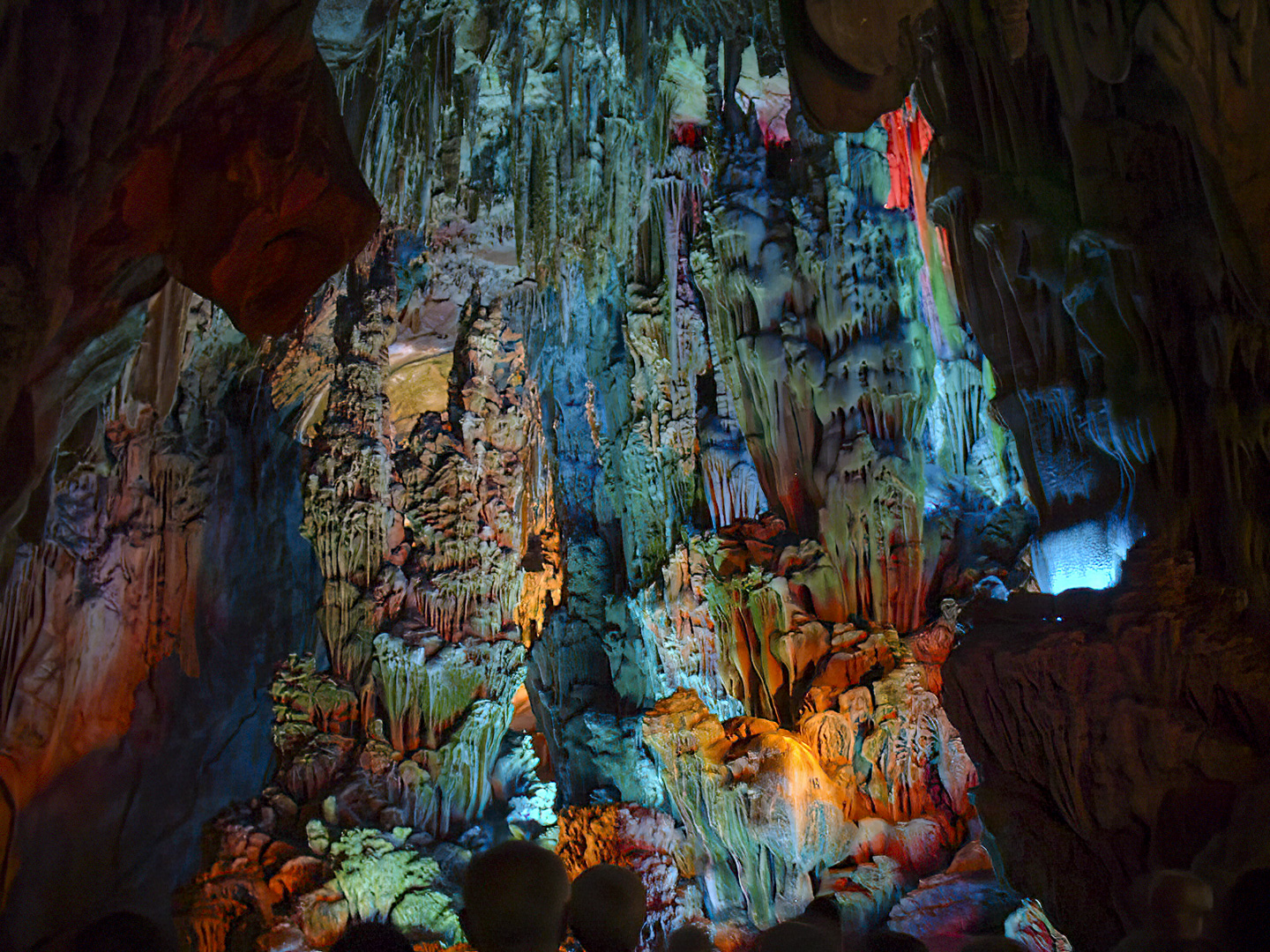
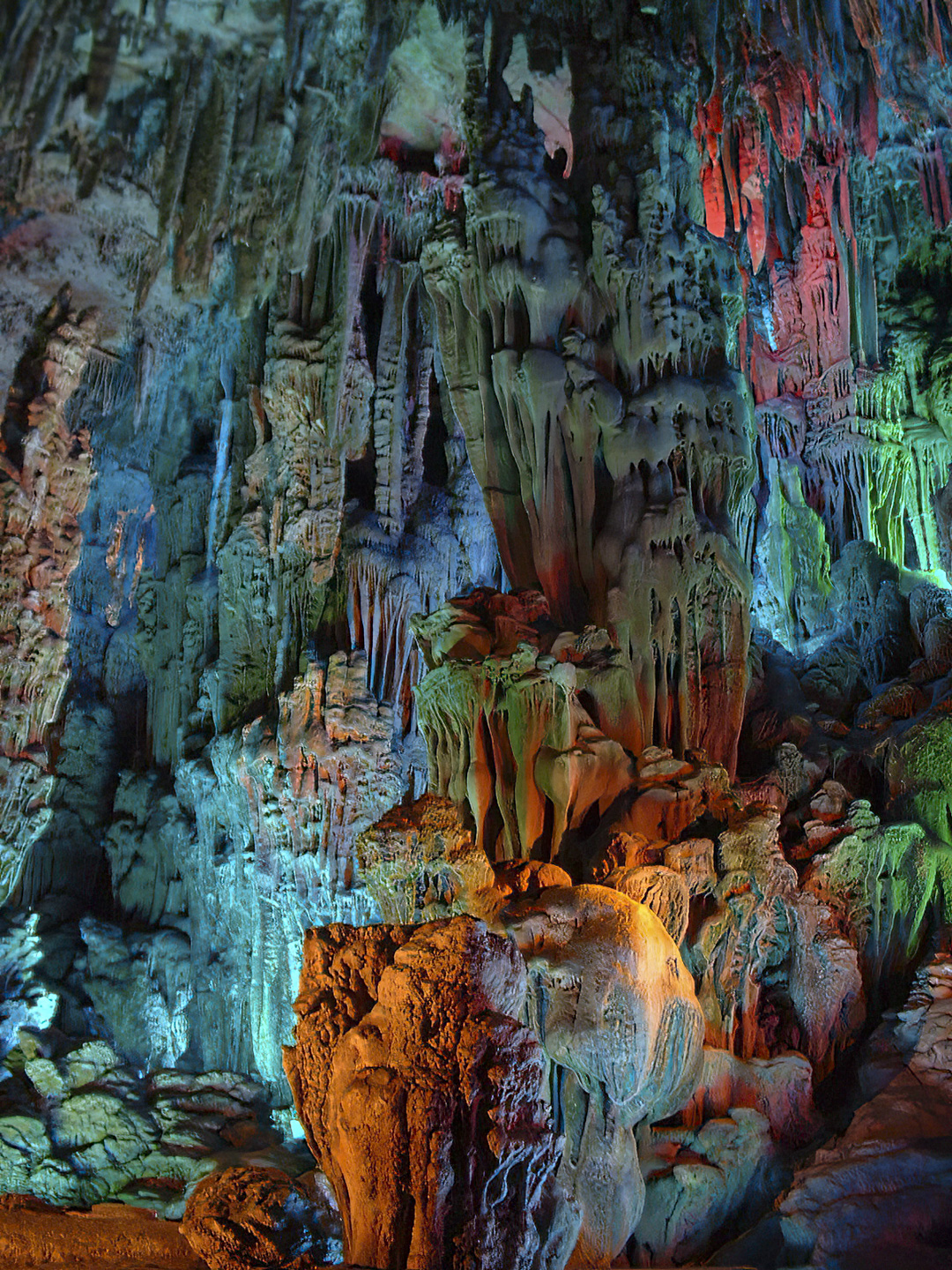
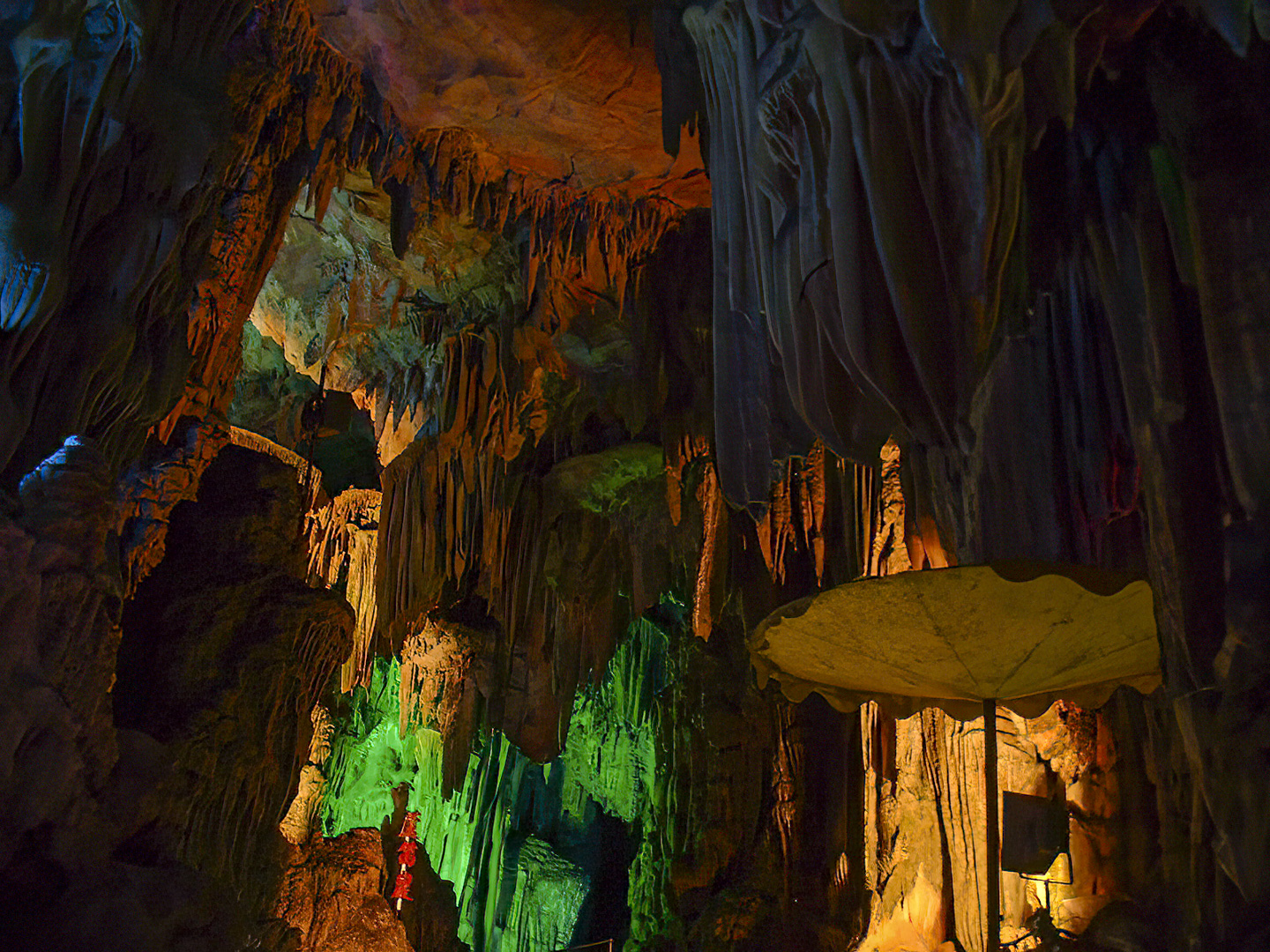
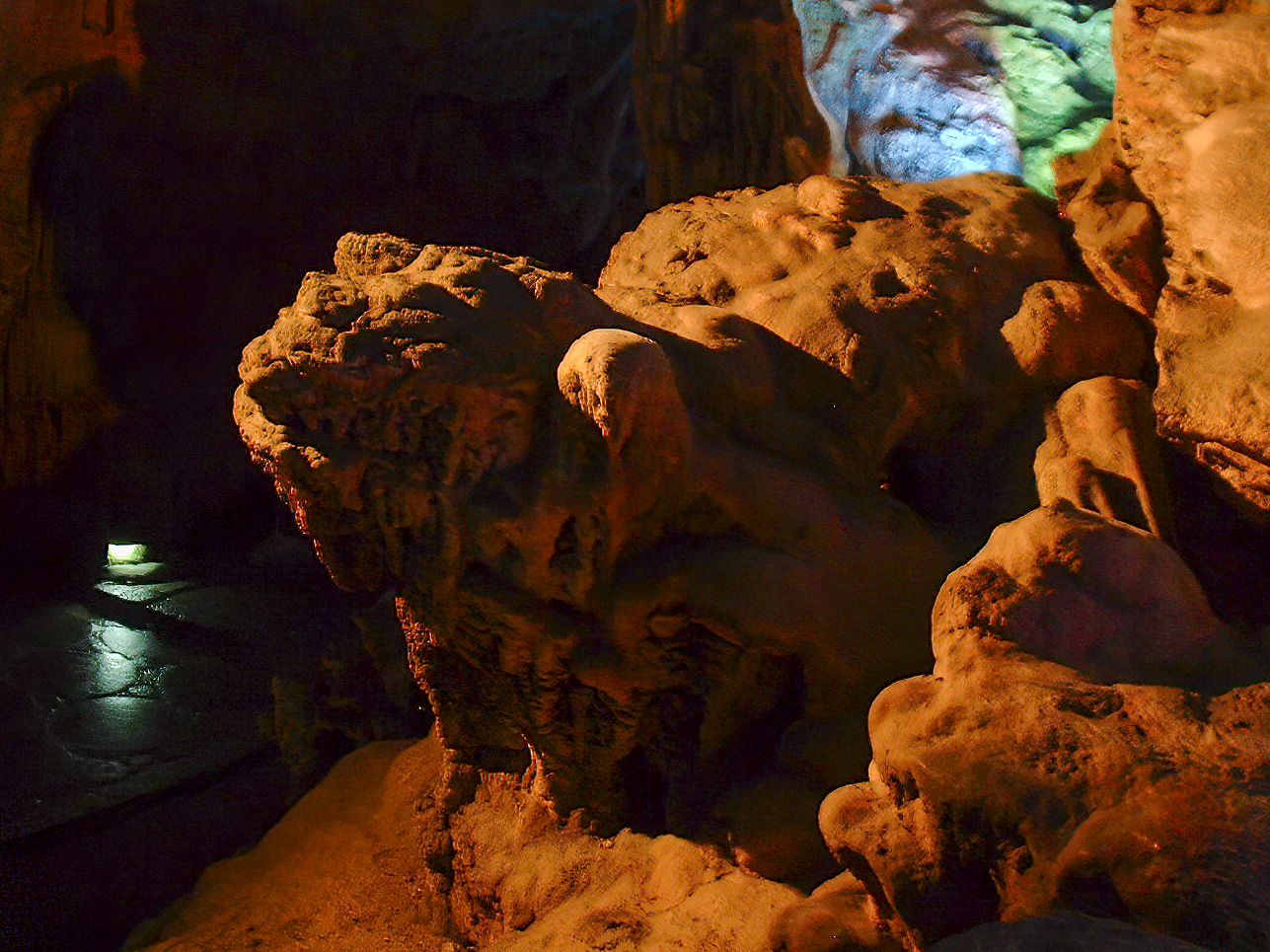
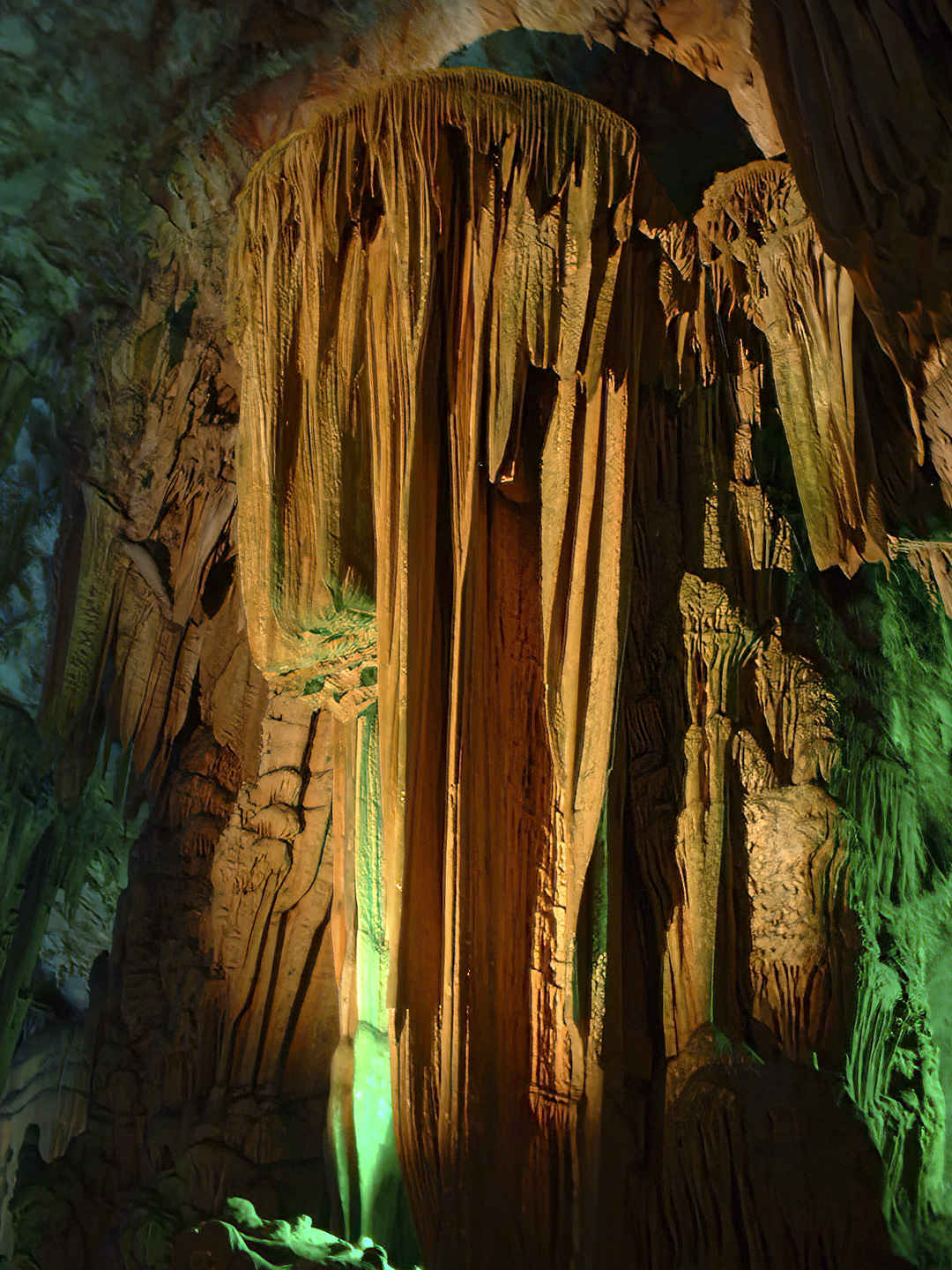
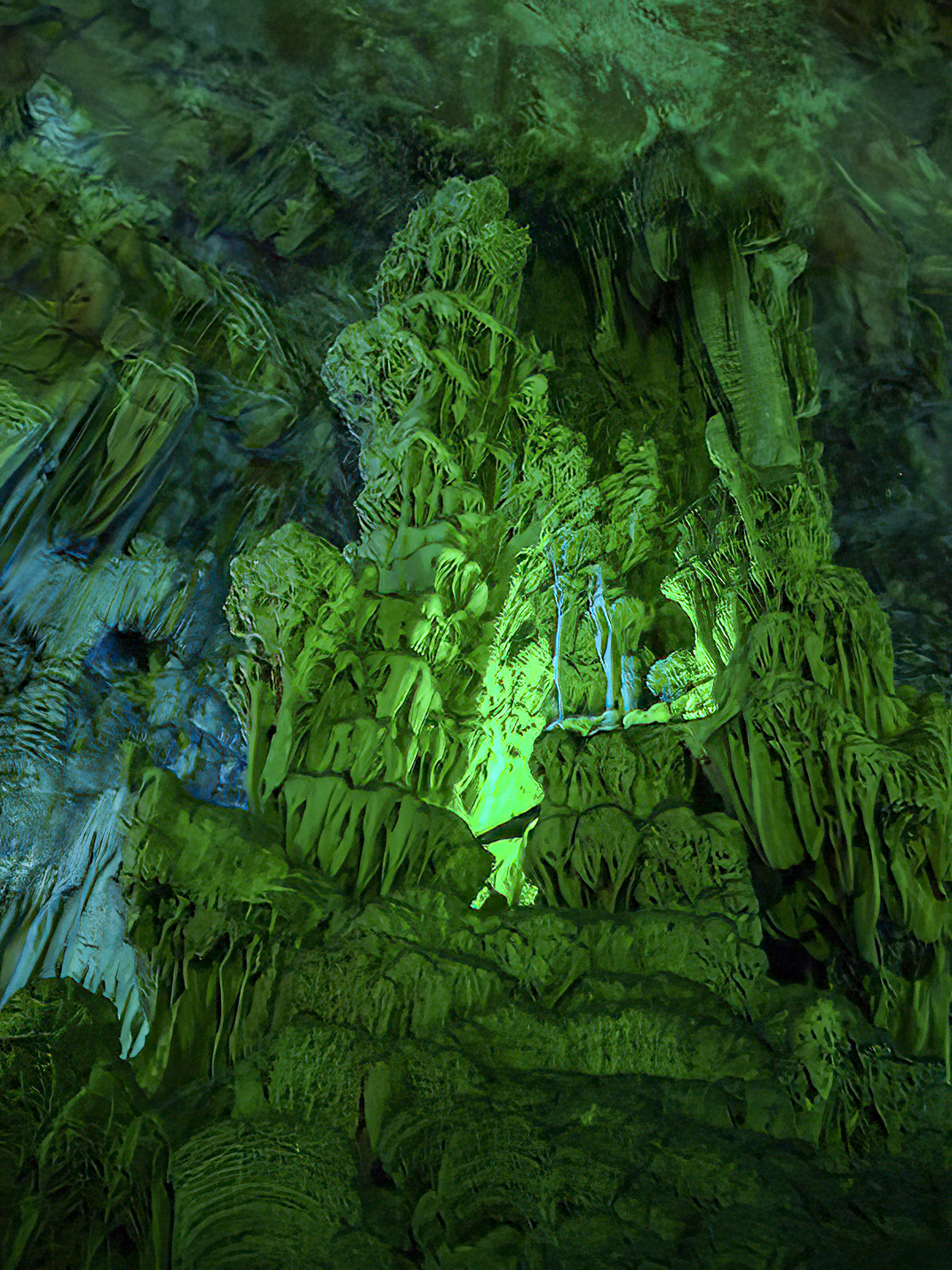
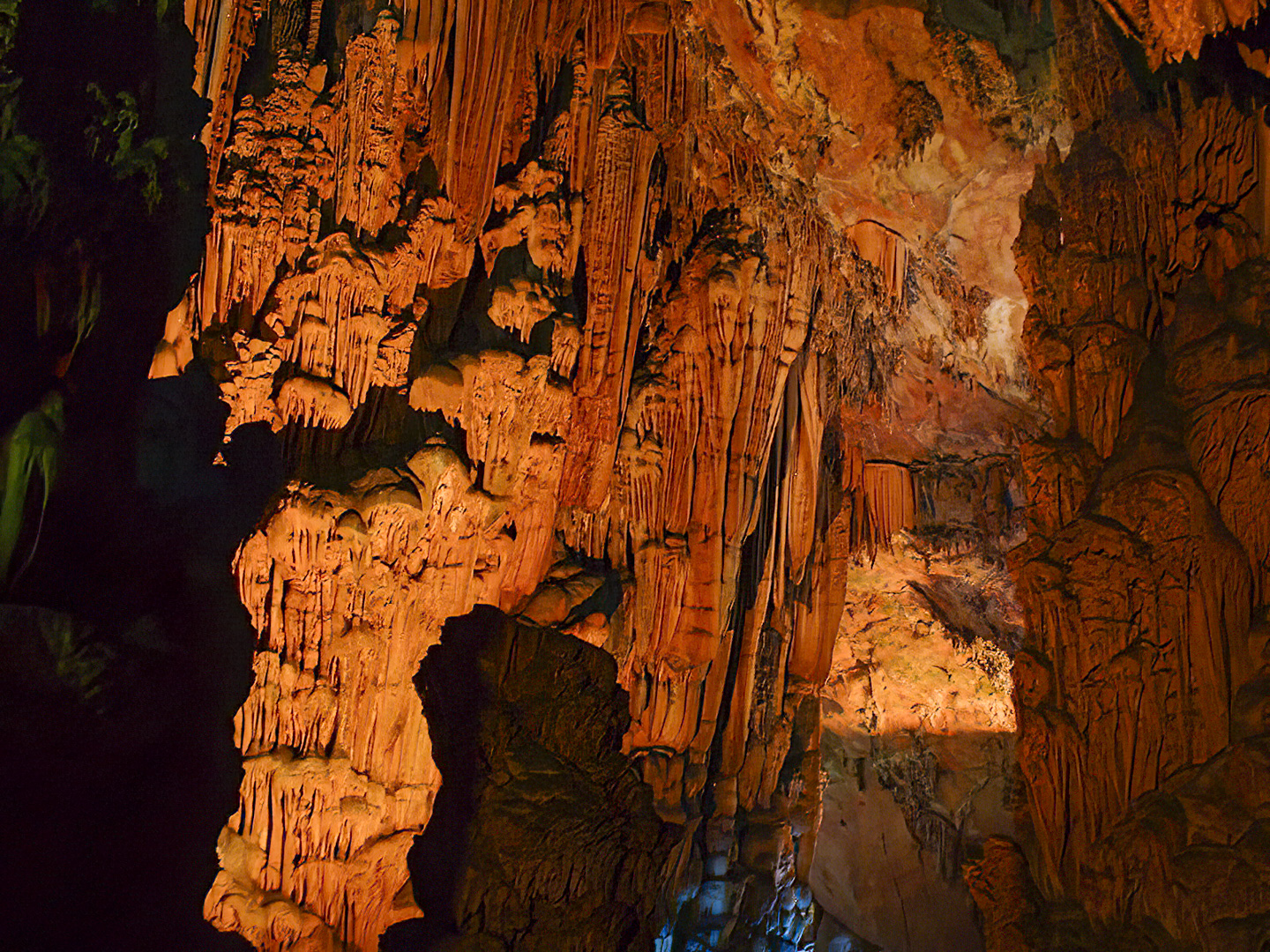
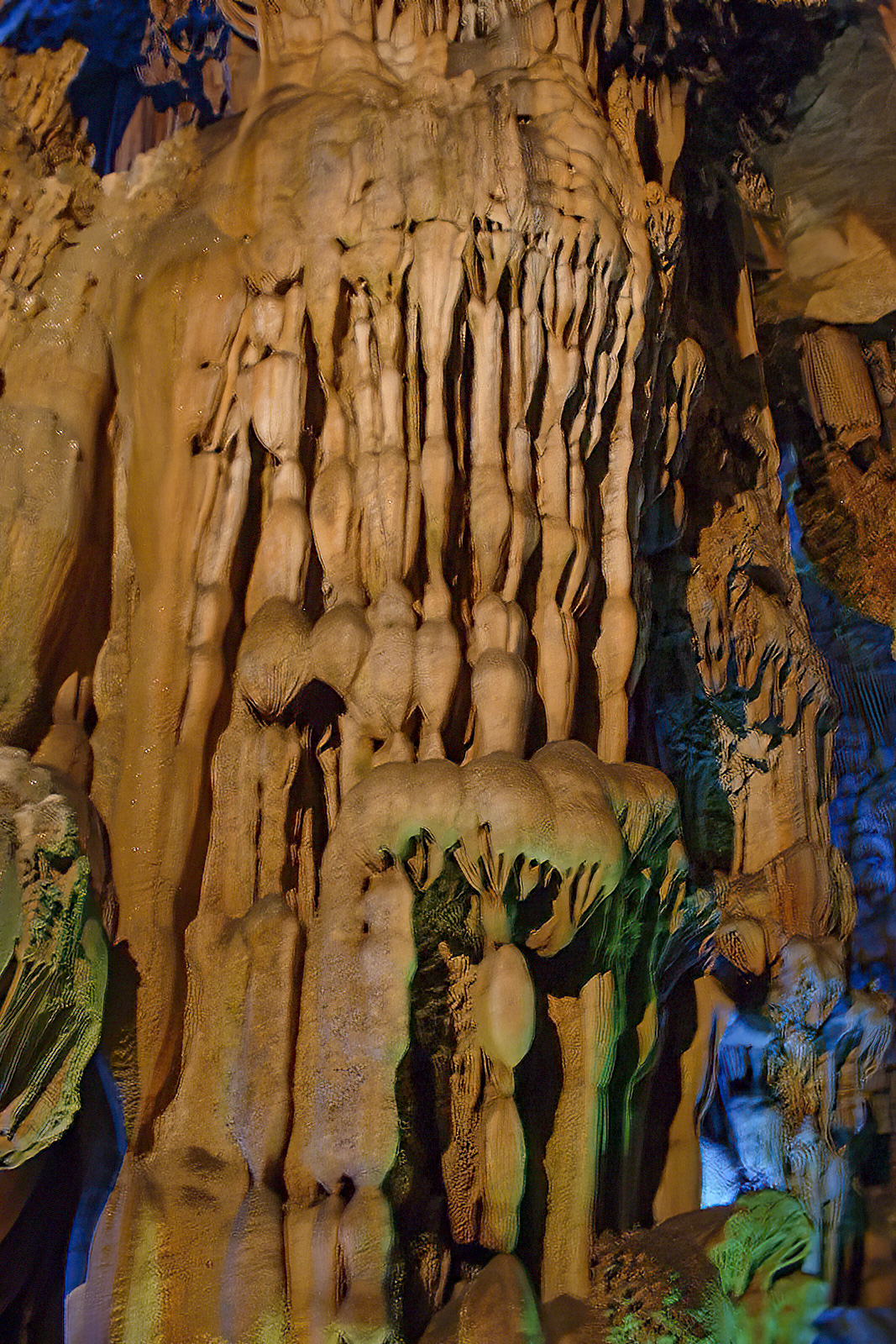
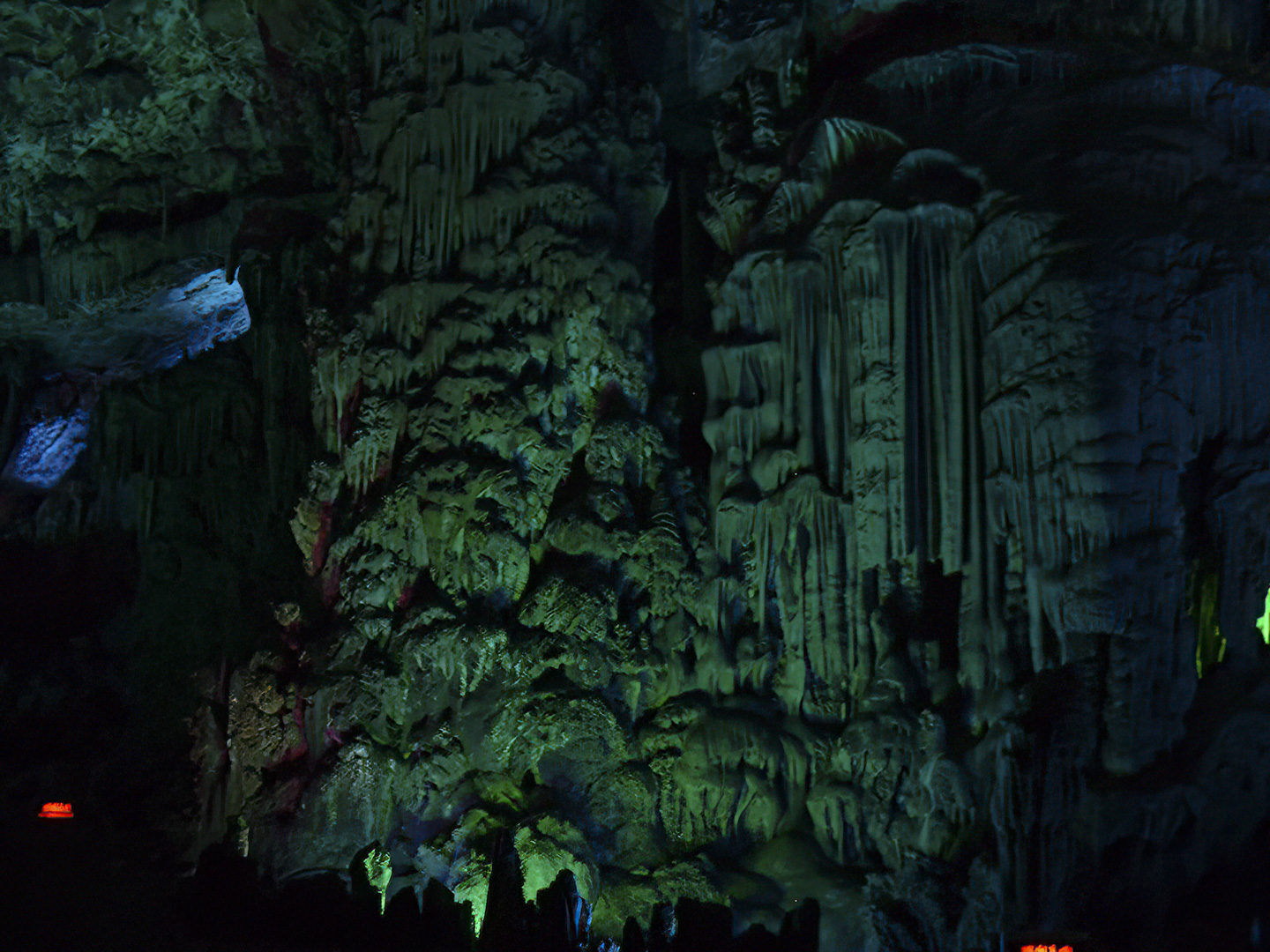
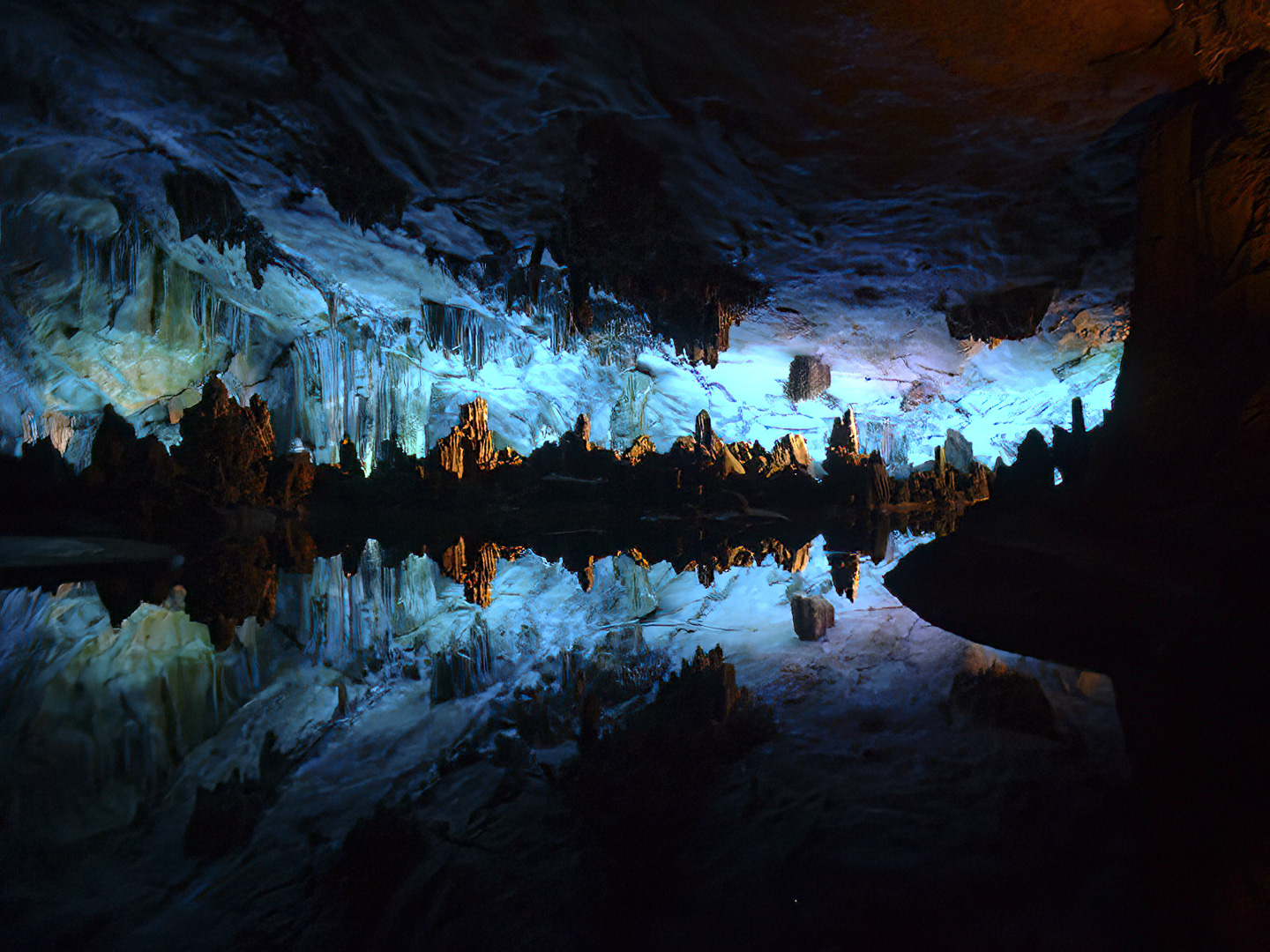
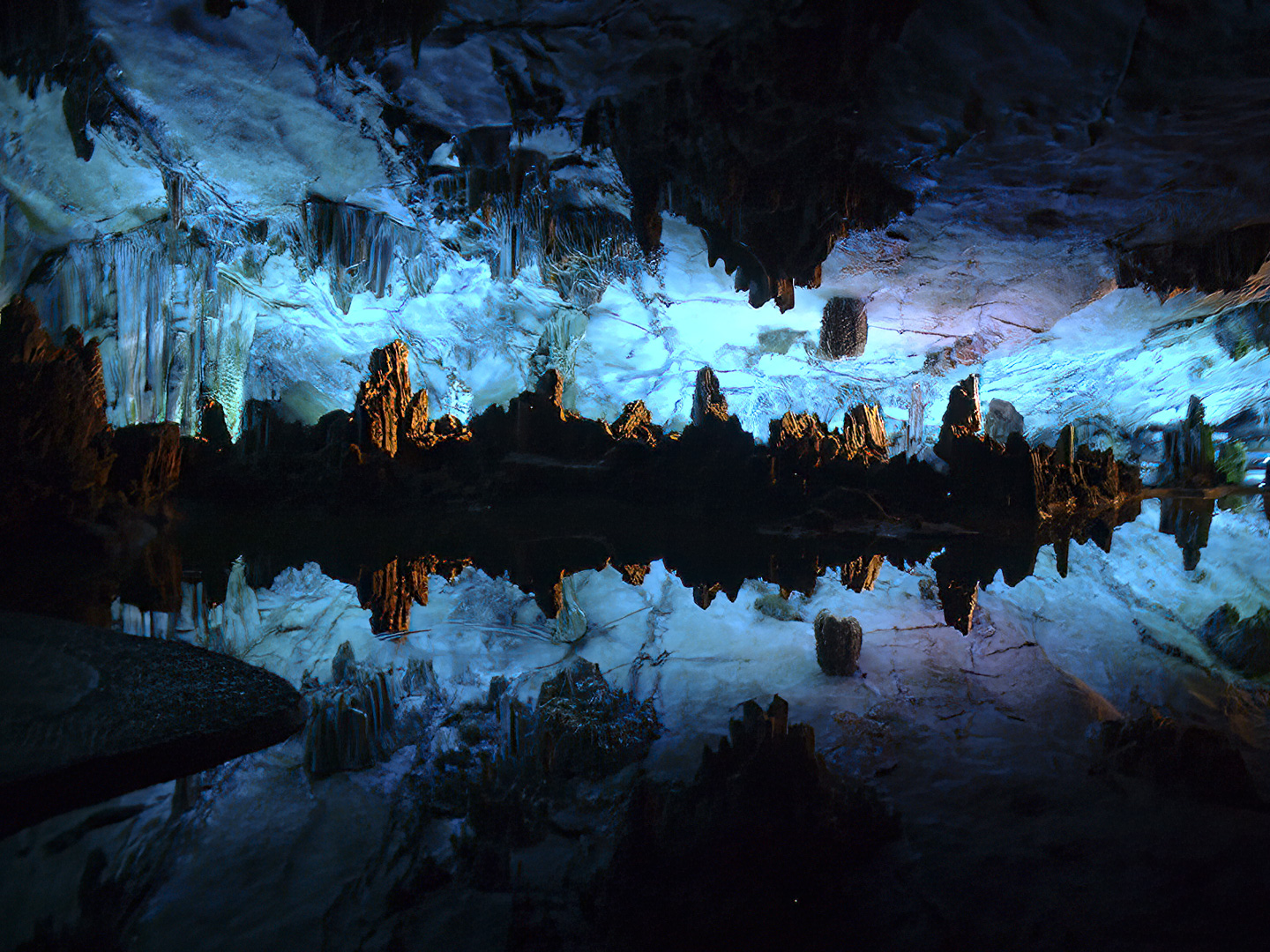
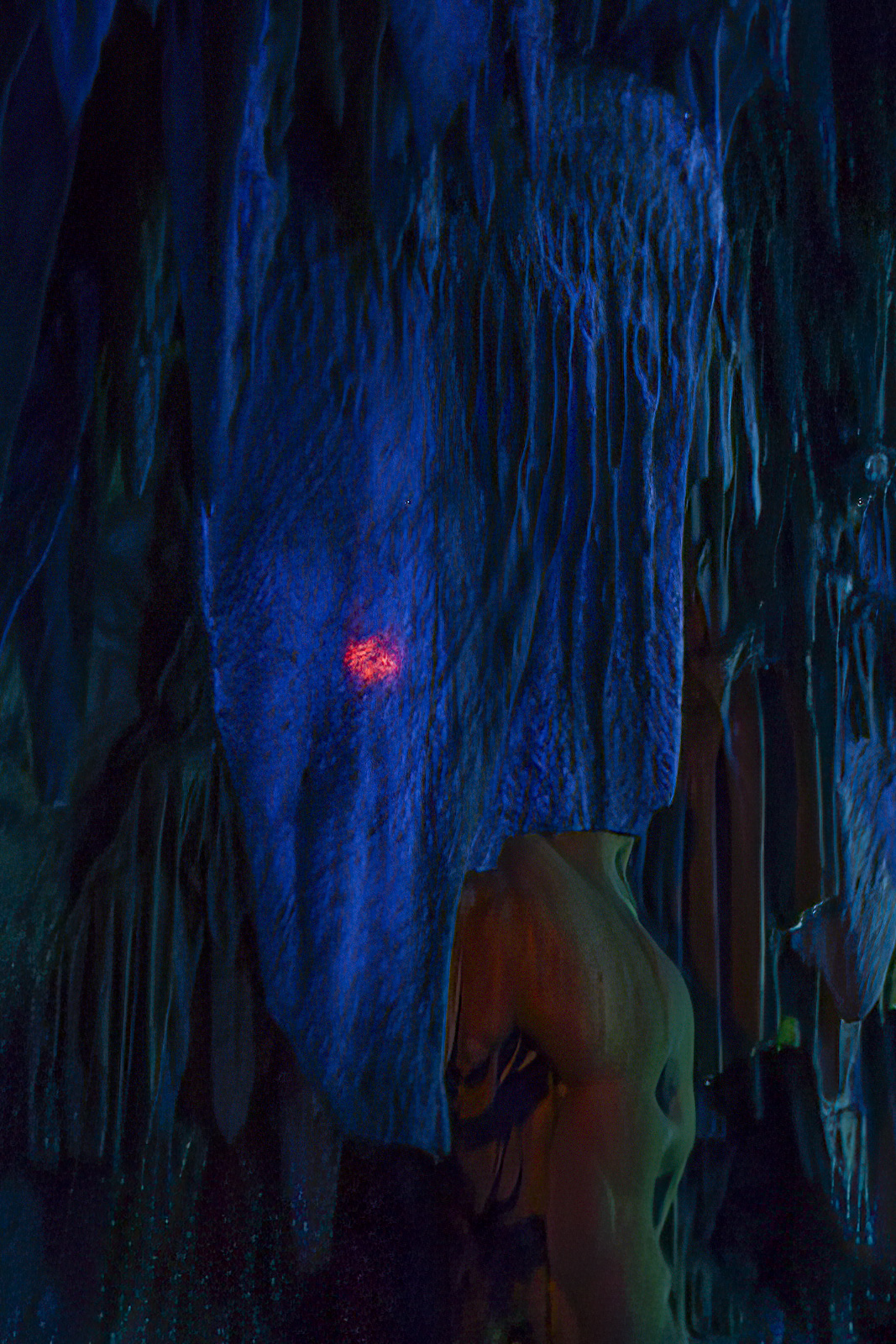
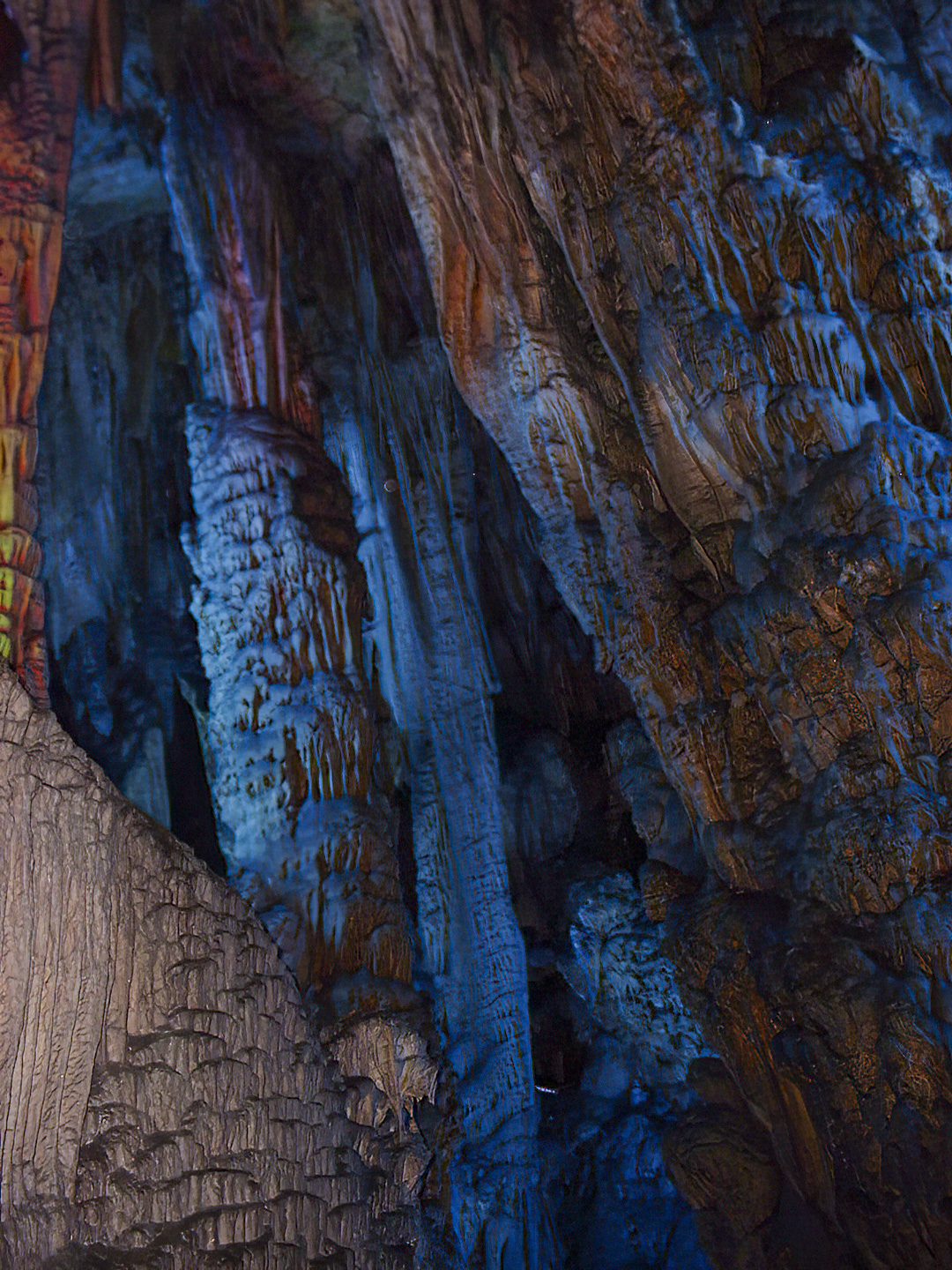
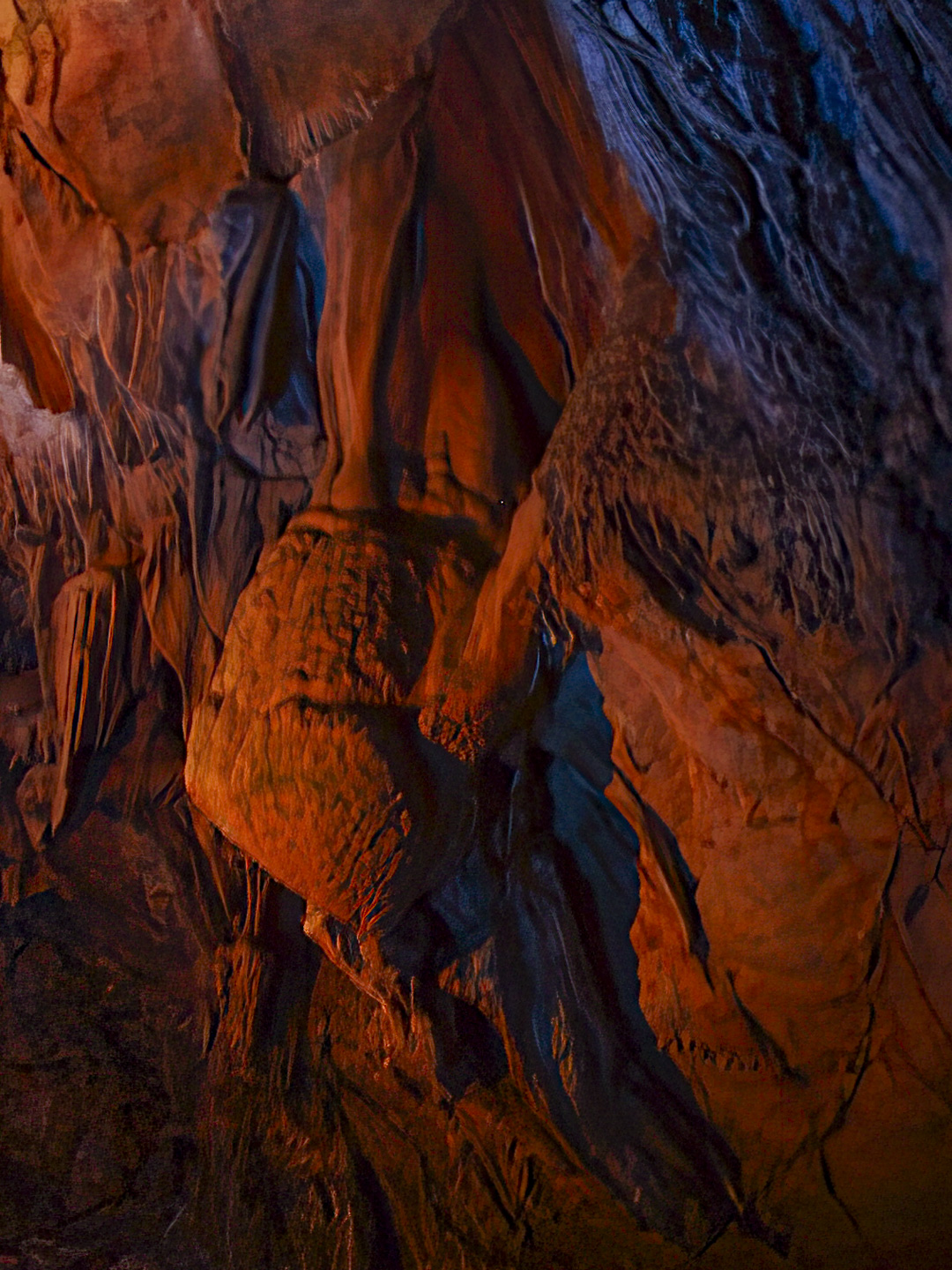
Reed Flute Cave (Ludi Yan, 芦笛岩) is a limestone cave in Guangming Hill, on the northwestern edge of Guilin in Guangxi. Its name comes from the reeds that grow around the entrance, which people traditionally cut and made into flutes. Like the famous karst peaks around Guilin, the cave was carved out of the limestone by water over immense stretches of time. The slow drip of mineral-rich water has filled it with stalactites, stalagmites, stone pillars and curtains of rock, and visitors have long given these formations fanciful names such as Virgin Forest, Lion Welcoming Guests and Crystal Palace of the Dragon King. The last of these is a vast chamber that can hold around a thousand people.
The cave has been visited for well over a thousand years. Its walls carry more than seventy ink inscriptions, the oldest from the Tang dynasty, left by travellers who came in by torchlight. It was later forgotten until the 1940s, when local people rediscovered it while sheltering from Japanese air raids. It opened to tourists in 1962. Today a walking route of about half a kilometre winds through the cave, past formations lit in vivid reds, greens, blues and purples. Some find the lighting magical, others a little garish, but nearly everyone agrees it is one of the most spectacular show caves in China.