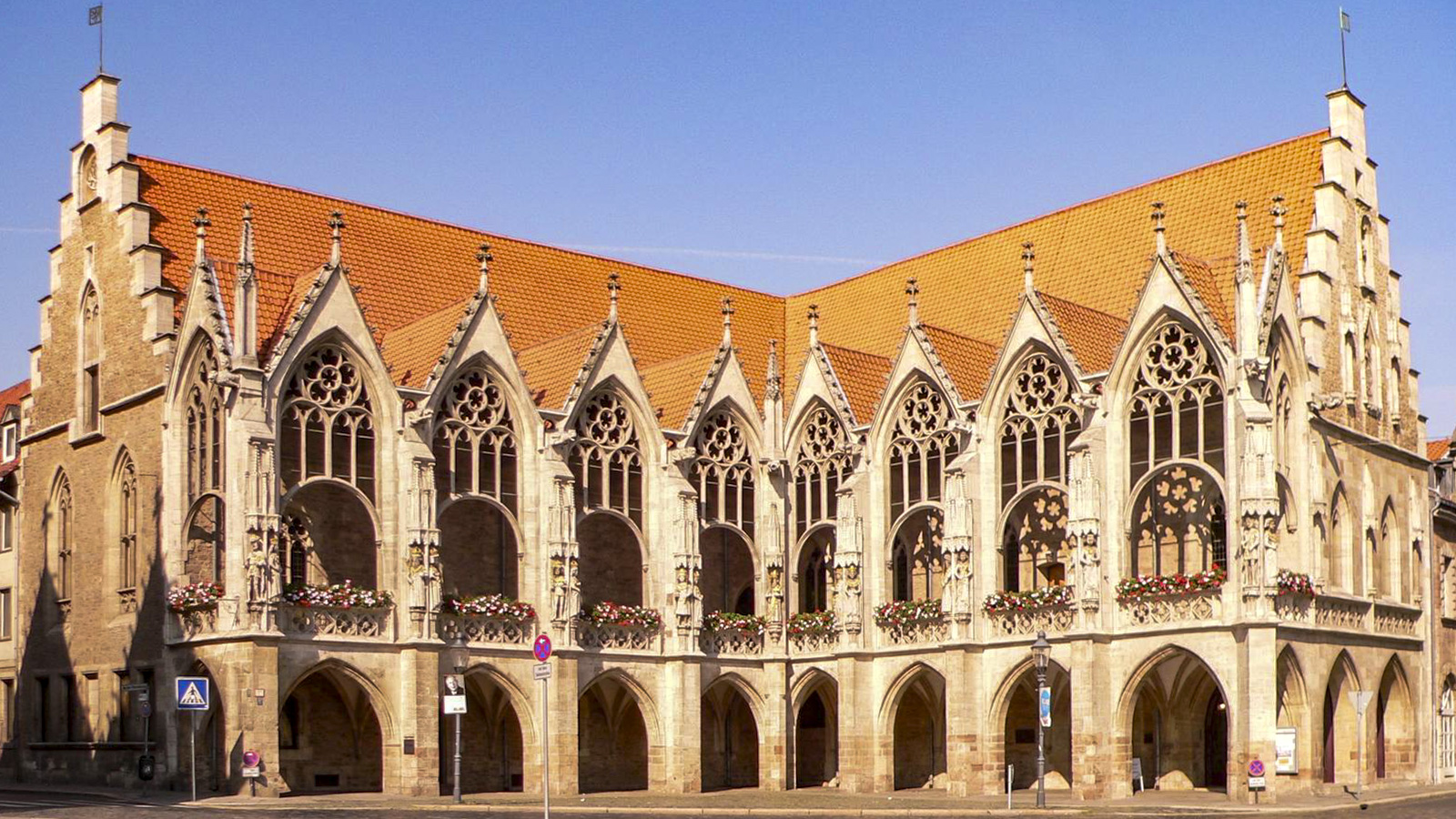
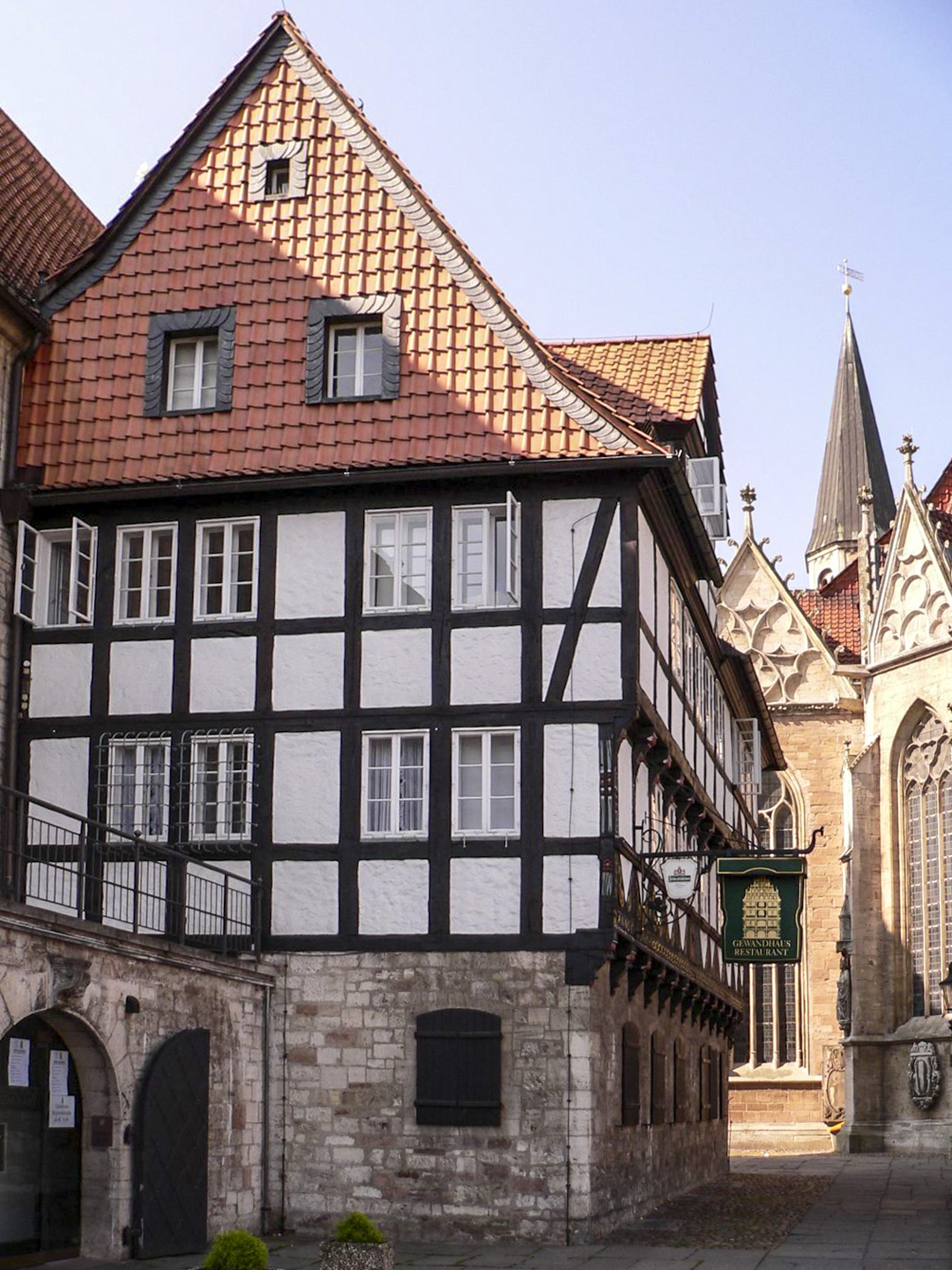
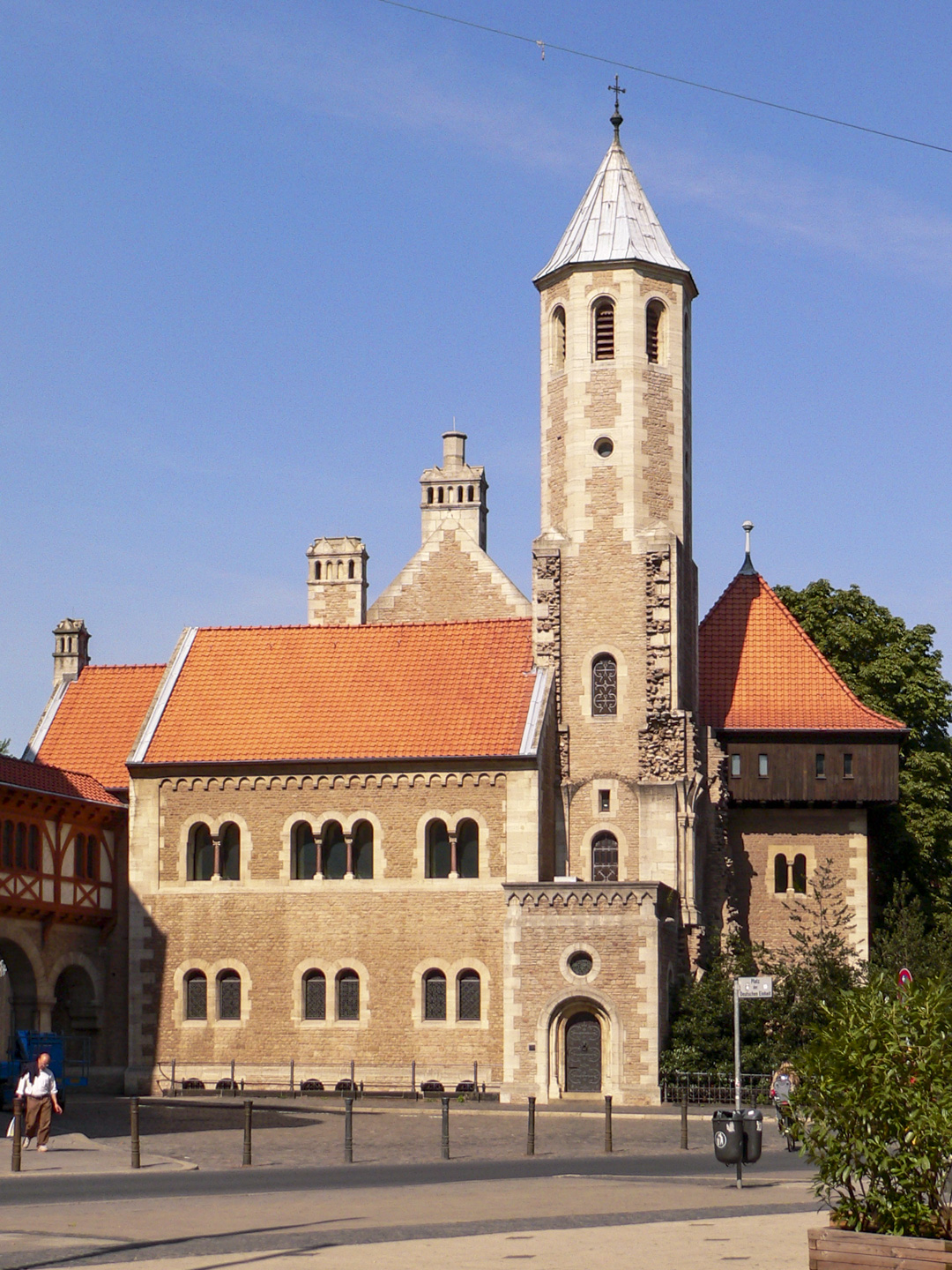
Braunschweig (known in English as Brunswick) is a city of about a quarter of a million people in Lower Saxony, and it owes much of its character to one man: Henry the Lion. In the 12th century this powerful Duke of Saxony and Bavaria made Braunschweig his residence. Around 1166 he put up a bronze lion outside his castle, Dankwarderode, as a symbol of his rule. It was the first large free-standing bronze sculpture cast north of the Alps since antiquity, and it is still the city’s emblem (the original is now kept indoors, with a copy outside). Next to the castle he founded the Romanesque Cathedral of St Blasius, where he lies buried beside his wife Matilda, a daughter of Henry II of England. In the Middle Ages Braunschweig grew into a rich Hanseatic trading city made up of five separate towns. Their legacy includes the Gothic Old Town Hall and the old Cloth Hall (Gewandhaus) on the Altstadtmarkt, one of the loveliest squares in northern Germany.
For centuries Braunschweig was the seat of the Dukes of Brunswick. Air raids in 1944 destroyed much of the historic centre. Today a few “traditional islands” of restored half-timbered houses and churches survive among the rebuilt streets. The ducal palace, demolished after the war, was given back its façade in 2007, topped by a huge bronze quadriga, although behind it is now a shopping centre and a palace museum. The city has a proud intellectual history. The mathematician Carl Friedrich Gauss was born here in 1777, and the writer Lessing spent his last years here. The Herzog Anton Ulrich Museum is one of the oldest public museums in Europe, with works by Rembrandt and Vermeer. The Technical University, founded in 1745, is one of Germany’s oldest. Braunschweig is also home to the PTB, Germany’s national metrology institute, whose atomic clocks set the official time for the whole country.